
When Developers Ask Taxpayers to Foot the Bill, Ask Hard Questions First
A proposal to use property tax revenue to finance private commercial development on the Treasure Coast deserves far more scrutiny than it has received
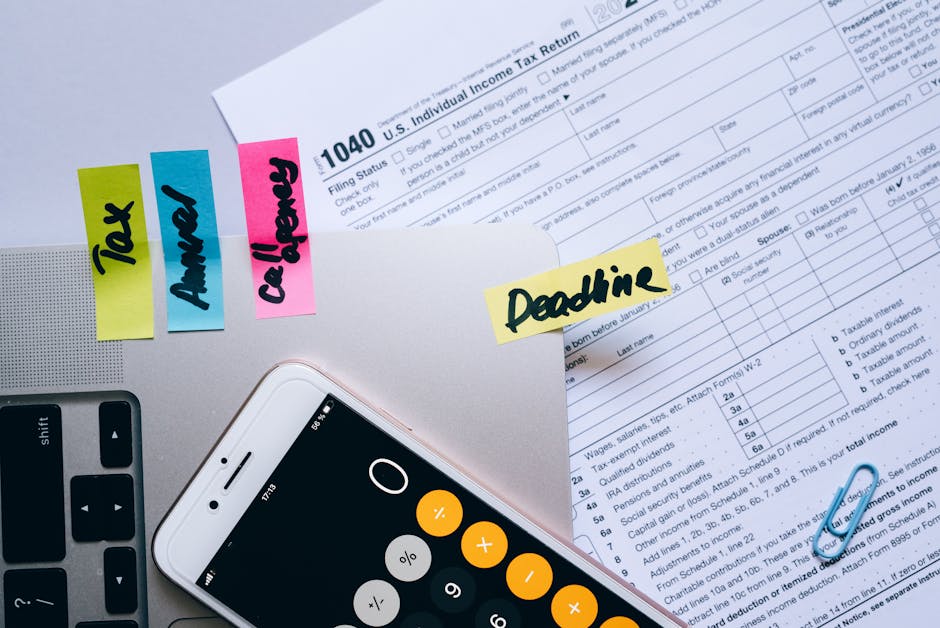
Here is a question every Treasure Coast homeowner and small-business owner should be asking right now: Why should your property tax dollars help subsidize a privately owned shopping mall or transit-adjacent development — and what guarantee do you have that the promised economic benefits ever materialize?
That question is not hypothetical. A financing mechanism is being floated in Florida that would redirect property tax revenue — the same tax base that funds schools, fire stations and county services — toward large-scale commercial real estate projects that developers are now trying to dress up as public infrastructure. Some have compared this to Brightline, the privately operated passenger rail line that runs through Martin, St. Lucie and Indian River counties. The comparison is flattering. It is also, on close examination, misleading.
Brightline was built with private capital and has operated, for better or worse, as a private enterprise. Whatever one thinks of its safety record on the Treasure Coast — and the number of grade-crossing fatalities along its corridor demands an ongoing conversation — it did not ask local governments to pledge property tax increments as a backstop for its investors. The financing scheme now being discussed for mall-style developments is fundamentally different.
The mechanism at issue bears the hallmarks of Tax Increment Financing, or TIF — a tool that captures the growth in property tax revenue within a designated district and redirects it away from general government coffers toward debt service on development bonds. TIF has legitimate uses. Redeveloping a blighted corridor in Fort Pierce, stabilizing a distressed commercial strip in Stuart or catalyzing mixed-use investment near the planned Brightline station in Indian River County could all, in theory, represent appropriate applications.
But TIF applied to greenfield retail — to a mall or lifestyle center that a developer was likely going to build anyway — is a subsidy dressed in the language of economic development. It shifts risk from private investors to the public and, critically, starves existing county and municipal budgets of the incremental tax revenue those governments were counting on to service growing communities.
Martin County Commissioner Harold Jenkins has spoken publicly about the need for fiscal caution when evaluating any proposal that encumbers future tax revenue for private benefit. His skepticism reflects a principle that should guide every elected official on the Treasure Coast: the burden of proof belongs to the developer, not the taxpayer.
Proponents will argue that the development pays for itself — that jobs, sales tax revenue and secondary growth justify the public subsidy. That argument deserves a serious, independent economic analysis before any vote, not a consultant's pro forma produced by the developer's own team.
Treasure Coast residents should contact their county commissioners and demand that any Tax Increment Financing proposal include an independent fiscal impact study, a clawback provision if job or revenue targets are missed, and a full public hearing — not just a consent agenda item — before a single dollar is committed. Attend your next commission meeting. Read the development agreement. The fine print is where the public interest either gets protected or quietly surrendered.
This article was generated with AI assistance using publicly available information. It was reviewed and approved by a human editor before publication. TC Sentinel uses AI writing tools in accordance with FTC guidelines.
Got a tip?
See something newsworthy? Help us cover the Treasure Coast.
Your identity is never published without your permission.

Comments
Be the first to comment.