
Voting Rights Groups Ask Florida Supreme Court to Block New Congressional Map Before Qualification Week
A Leon County judge and an appellate court both refused to halt the map; the state's high court is the last backstop before Monday's deadline
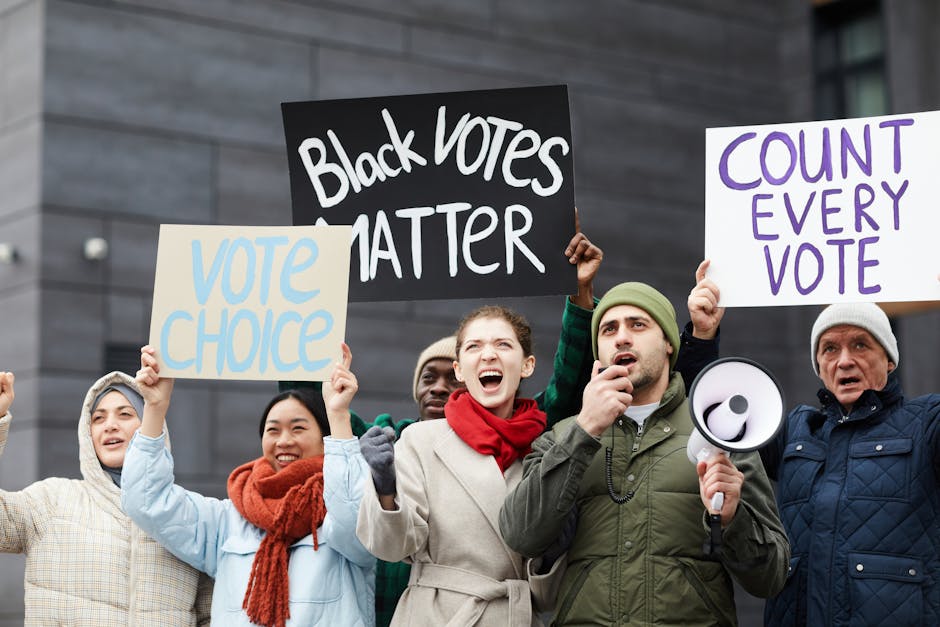
With candidate qualification set to open Monday, voting rights advocates have made a last-ditch appeal to the Florida Supreme Court to freeze the state's newly redrawn congressional map — a move that could reshape which districts Treasure Coast candidates file to run in for the 2026 midterms.
The Equal Ground Education Fund and other plaintiffs petitioned the state's high court to reverse a Leon County circuit judge's decision declining to issue an injunction against the map. The First District Court of Appeal upheld that ruling, leaving the Florida Supreme Court as the final authority with power to halt the map before qualifying begins at noon Monday.
Candidates on the Treasure Coast and across Florida would file under the new lines unless the court acts. Martin, St. Lucie and Indian River counties fall within congressional districts whose boundaries shifted under the plan — meaning the question of which map governs is not abstract. It determines which communities share a representative in Washington and, by extension, who will be on local ballots this cycle.
Plaintiffs argue the map, signed last month by Gov. Ron DeSantis, should not govern 2026 elections while questions remain about whether his office violated Florida's constitutional ban on partisan gerrymandering. The senior analyst who drafted the new map acknowledged to the Florida Senate that he relied on partisan voter data in drawing the lines, public records show. The revised map cuts the number of congressional districts where most voters backed Democrat Kamala Harris in 2024 from eight to four, while expanding Trump-majority districts from roughly 20 to 24.
DeSantis has argued the redraw was legally required by the U.S. Supreme Court's recent ruling in Louisiana v. Callais, which restricts the use of race as a primary factor in drawing district boundaries. He has called the previous 2022 map — itself drawn by his office — unconstitutional, a position plaintiffs describe as legally untenable given the timing of the ruling.
"The public interest overwhelmingly favors enjoining the 2026 Plan and ordering upcoming elections to occur under the 2022 Plan," the petition states. Attorneys for the voting groups also note that candidates have already been permitted to qualify by petition using signatures gathered from anywhere in Florida, which they argue blunts any disruption a court pause would cause.
Candidate qualification closes at noon June 12.
This article was generated with AI assistance using publicly available information. It was reviewed and approved by a human editor before publication. TC Sentinel uses AI writing tools in accordance with FTC guidelines.
Got a tip?
See something newsworthy? Help us cover the Treasure Coast.
Your identity is never published without your permission.

Comments
Be the first to comment.