
Supreme Court Takes Up Geofence Warrants in Case That Could Reshape Police Surveillance Nationwide
A Virginia bank robbery conviction is the vehicle for a ruling that could determine whether your phone's location data is protected from warrantless searches
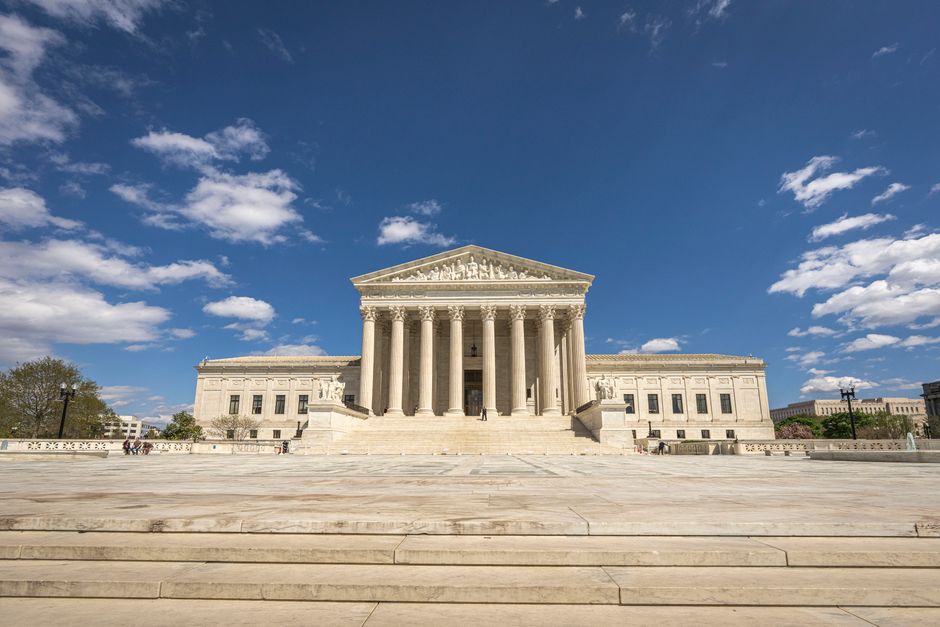
The U.S. Supreme Court heard arguments Monday in a case that will determine whether police can use "geofence" warrants to sweep the location histories of every cellphone near a crime scene — a surveillance technique that has cracked cold cases and nabbed Capitol rioters but that critics say turns millions of innocent Americans into suspects.
At the center of the case is Okello Chatrie, who robbed the Call Federal Credit Union in Midlothian, Virginia, in May 2019 and made off with $195,000. With no suspect and no clear surveillance footage, investigators obtained a geofence warrant served on Google, which identified Chatrie's phone as one of a handful of devices near the bank at the time of the robbery. A subsequent search of his home turned up nearly $100,000 in cash, including bills still wrapped in bands signed by the bank teller. Chatrie pleaded guilty and was sentenced to nearly 12 years in federal prison.
The technique inverts traditional law enforcement: rather than identifying a suspect and then seeking a warrant, police define a geographic area and a time window, then demand that tech companies identify every device — and therefore every person — present. Prosecutors say geofence warrants have helped solve killings in California, Georgia and North Carolina, and were used to identify participants in the Jan. 6, 2021 Capitol attack. Civil liberties advocates counter that the searches are unconstitutional fishing expeditions that expose innocent bystanders — joggers, commuters, anyone who happened to be nearby — to government scrutiny of their private movements.
The Trump administration has argued police should be permitted to use the warrants without added constitutional constraints. Chatrie's attorneys want the court to prohibit them entirely. The Policing Project at New York University School of Law urged the justices to chart a middle course, warning that the administration's position would allow geofence warrants "with no judicial supervision or constitutional safeguards."
A federal appeals court in New Orleans already ruled such warrants "are general warrants categorically prohibited by the Fourth Amendment," creating a direct circuit split that makes Supreme Court resolution essential.
Local Impact: The ruling will directly affect law enforcement agencies across the Treasure Coast. The Martin County Sheriff's Office and St. Lucie County Sheriff's Office regularly coordinate with federal investigators on financial crimes, drug trafficking and violent felony cases in which geofence warrants have become a standard investigative tool. A ruling curtailing or expanding the technique will set the legal boundaries for every digital search warrant sought by local deputies and federal agents operating in Martin, St. Lucie and Indian River counties. A decision is expected before the Supreme Court's term concludes in late June 2026.
This article was generated with AI assistance using publicly available information. It was reviewed and approved by a human editor before publication. TC Sentinel uses AI writing tools in accordance with FTC guidelines.
Got a tip?
See something newsworthy? Help us cover the Treasure Coast.
Your identity is never published without your permission.

Comments
Be the first to comment.