Safeguard Treasure Coast's Bird Flyways From Growing Threats
Tens of thousands of migrating birds like roseate spoonbills and ospreys soar over Martin, St. Lucie and Indian River counties each year, but these vital routes face persistent pressures demanding urgent protection.

# Opinion | TC Sentinel Editorial Board
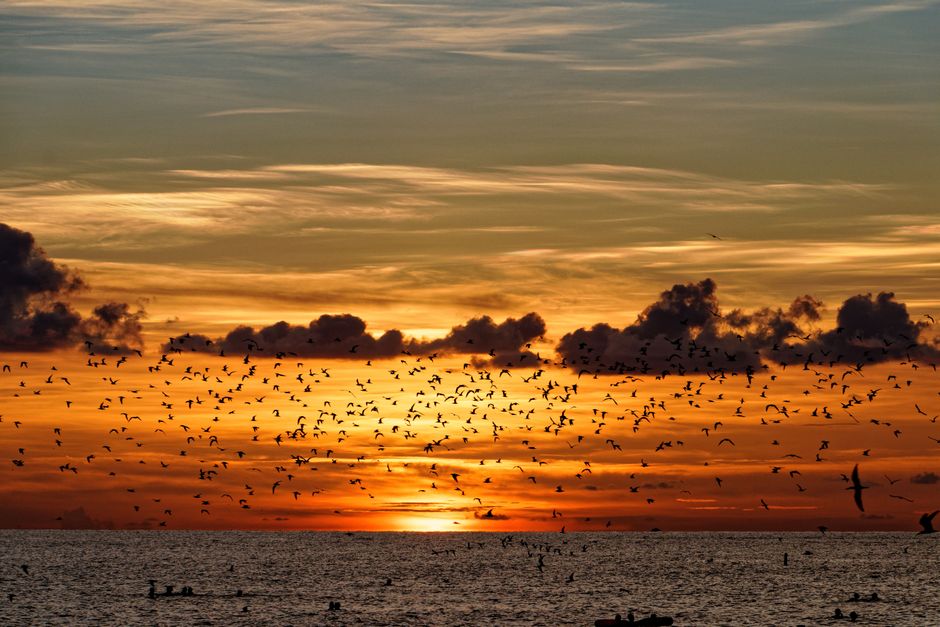
Every autumn and spring, something extraordinary happens above the Treasure Coast that most of us drive beneath without a second glance. Tens of thousands of birds — roseate spoonbills, ospreys, swallow-tailed kites, painted buntings, and rarer species still — thread through the skies above our barrier islands, river corridors, and inland wetlands. They follow routes older than any road we've ever paved. Florida functions as one of the great avian waypoints in the Western Hemisphere, biologists say. The Treasure Coast is not peripheral to that story. It is central to it.
Call it what it is: a natural airport. Traffic arrives and departs on schedule set by seasons, not by the St. Lucie County Port and Airport Authority. The runways are the Atlantic shoreline, the St. Lucie River estuary, and the freshwater marshes of Savannas Preserve State Park in Jensen Beach — 10,000 acres of Florida scrub, wetland, and flatwoods representing one of the last intact Atlantic coastal ridge ecosystems remaining in the state. Birds don't file flight plans, but they depend absolutely on the integrity of those corridors being maintained on the ground.
That integrity is not guaranteed. Development pressure along U.S. 1 in St. Lucie County, continued nutrient pollution discharges into the St. Lucie River and the incremental loss of native upland buffers around Indian River County's coastal wetlands all chip away at the habitat that makes this flyway function. No single project kills it. The cumulative effect might.
The fair objection here is economic. Our counties are growing — Indian River County's population has climbed past 165,000, and Martin County faces persistent housing affordability pressure that makes open-space preservation feel like a luxury argument. Landowners have rights. Infrastructure must be built. These are not abstract concerns, and any editorial that dismisses them is not being honest with its readers.
But preservation and growth are not a zero-sum trade everywhere. The ecological services that intact flyway habitat provides — storm surge buffering, water filtration, the tourism economy anchored in Treasure Coast birding trails — are quantifiable public goods. Wildlife watching contributed more than $75 billion annually to the national economy, according to a two thousand nineteen U.S. Fish and Wildlife Service report. The Treasure Coast captures a meaningful share of that.
What we are asking is not sentiment. We are asking for structure. The Martin County Board of County Commissioners should place an item before its Natural Resources Advisory Commission to formally review whether existing wildlife corridor designations along the St. Lucie River shoreline are being adequately enforced in current development approvals and to report its findings in an open public session before the end of the two thousand twenty-five fiscal year. The birds will keep arriving. The question is whether we will have done enough, on the ground and in the record, to deserve them.
This article was generated with AI assistance using publicly available information. It was reviewed and approved by a human editor before publication. TC Sentinel uses AI writing tools in accordance with FTC guidelines.
Stay informed. Subscribe free.
Get the Treasure Coast's daily briefing in your inbox every morning.
Got a Tip?
See something newsworthy? Help us cover the Treasure Coast.
Your identity is never published without your permission.

Reader Comments
Leave a Comment