Our Shorelines Are Still Speaking — Are We Listening?
The Indian River Lagoon and its barrier islands offer a living classroom, but only if we protect what remains

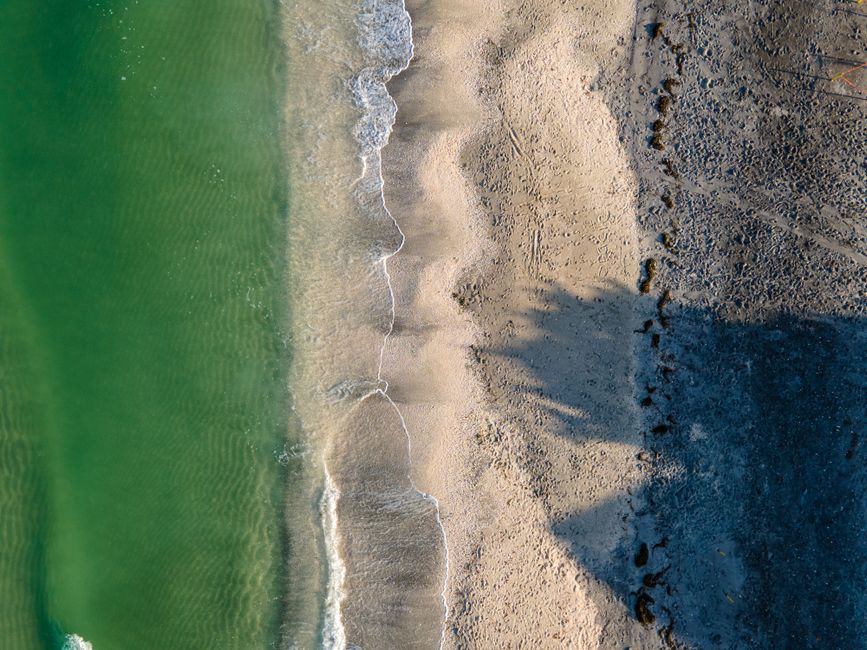
Opinion | TC Sentinel Editorial Board
Stand at the edge of the Indian River Lagoon at first light on any given morning — at the Riverwalk in Stuart, or along the mangrove-fringed shore of the Savannas Preserve State Park in St. Lucie County — and you may feel, briefly, that time has stopped. A great blue heron stands motionless in the shallows. A pelican folds itself into a dive. The water, when the algae haven't taken it, reflects the sky like hammered silver.
That feeling of timelessness is real. It is also fragile. And it is precisely what is at stake in the policy decisions being made right now by officials in Martin, St. Lucie, and Indian River counties.
The Treasure Coast's coastal ecosystems — its seagrass meadows, its mangrove corridors, its oyster reefs — are not scenic backdrops. They are functional infrastructure. The Indian River Lagoon supports more than 4,300 species of plants and animals, making it one of the most biodiverse estuaries in North America, according to the Florida Fish and Wildlife Conservation Commission. Dr. Lew Edmiston, who spent decades studying Florida's coastal systems at Florida State University, documented that seagrass beds serve as critical nursery habitat for commercially and recreationally important fish species, including snook, redfish, and spotted seatrout — species that define the Treasure Coast's identity and economy.
That ecosystem is under documented stress. Freshwater discharges from Lake Okeechobee — managed through the Army Corps of Engineers' water control structures — continue to drive algal blooms that smother seagrass and deplete oxygen in the lagoon, according to the South Florida Water Management District's 2023 Lower East Coast Water Supply Plan. Martin County Commissioner Sarah Heard, who has spent years as one of the most persistent local voices on water quality, has repeatedly cited St. Lucie Estuary permit filings and Army Corps operational plans in arguing that the federal government's management of Lake Okeechobee prioritizes agricultural water storage over estuary health [NEEDS VERIFICATION of her most recent specific public statement].
We should be honest about the counterargument. The Army Corps of Engineers and the South Florida Water Management District operate within constraints that are not purely political — they are physical. Lake Okeechobee's aging Herbert Hoover Dike, which the Army Corps spent more than $1.8 billion to rehabilitate, limits how much water can safely be held back. Discharges, officials argue, are sometimes a necessary safety release, not a policy preference. That is a real constraint, and dismissing it entirely would be intellectually dishonest.
But "necessary" has a threshold, and that threshold is a policy choice. The EAA Reservoir — the Everglades Agricultural Area Reservoir south of the lake — is intended to redirect those flows southward rather than east and west into our estuaries. Construction is ongoing but behind schedule, according to the South Florida Ecosystem Restoration Task Force's project records. Every delayed contract, every deferred funding authorization, represents a season's worth of damage to the lagoon's seagrass beds — damage measured in acres lost, in species counts declined, in fishing charters that came back empty.
The naturalist who pauses on a coastal shore and records what she sees is doing something essential: she is bearing witness. Journalism can do the same. So can citizens.
What You Can Do: The South Florida Water Management District Governing Board holds public meetings monthly. Contact the district at sfwmd.gov or call (561) 686-8800 to confirm the next meeting date and sign up to speak. Martin County's Environmental Quality Advisory Board meets regularly and accepts written public comment; contact the Martin County Administrator's office at (772) 288-5400 to submit testimony on water quality policy before the next scheduled agenda. The lagoon will not advocate for itself. We have to.
This article was generated with AI assistance using publicly available information. It was reviewed and approved by a human editor before publication. TC Sentinel uses AI writing tools in accordance with FTC guidelines.
Stay informed. Subscribe free.
Get the Treasure Coast's daily briefing in your inbox every morning.
Got a Tip?
See something newsworthy? Help us cover the Treasure Coast.
Your identity is never published without your permission.

Reader Comments
Leave a Comment