Lyrid Meteor Shower Peaks Tuesday Night Over Treasure Coast Shores
Skywatchers along the Indian River Lagoon can spot up to 20 shooting stars per hour as a crescent moon sets, offering darker skies than inland spots.

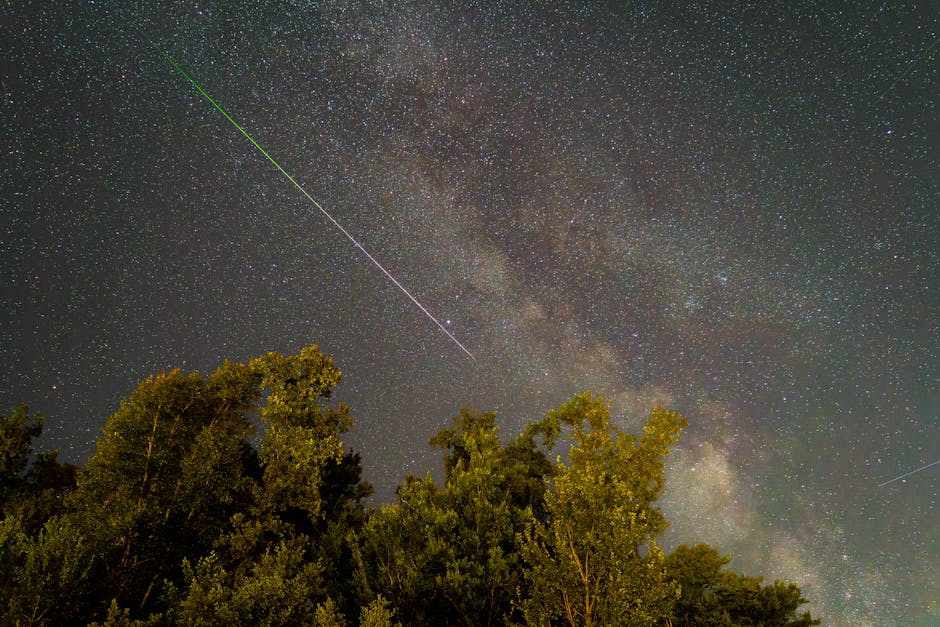
Head down to the Indian River Lagoon shoreline after midnight Tuesday, lay back on the hood of your truck, and look northeast. You may catch a piece of comet Thatcher burning up 60 miles above your head.
The annual Lyrid meteor shower peaks Tuesday night into Wednesday morning, and this year's conditions are nearly ideal. The crescent moon will set before the display reaches full intensity, leaving the Treasure Coast sky as dark as it gets this close to the Atlantic — a genuine advantage over inland viewing, NASA said. Skywatchers can expect 10 to 20 shooting stars per hour at peak, forecasters said.
"We only get to see the actual comet once every 415 years," said Maria Valdes, a meteorite researcher at the School of the Art Institute of Chicago. "But we pass through the grains that have been left in its wake every year around the same time."
The Lyrids rank among the oldest recorded meteor showers in human history, with documented sightings stretching back more than 2,500 years. Each streak is a fragment of comet Thatcher — an icy body on a 415-year orbit — vaporizing as it slams into Earth's upper atmosphere at tens of thousands of miles per hour.
For Treasure Coast residents, the viewing prescription is simple: get away from the glow of U.S. 1 and Port St. Lucie streetlights. Fort Pierce's South Bridge fishing pier, the beach access at Round Island Park in Indian River County, or any dark stretch of the St. Lucie County shoreline will dramatically improve the show. Give your eyes 15 to 30 minutes to adjust, and leave your phone in your pocket.
"A meteor looks like a trail of light in the sky," said astronomer Lisa Will of San Diego City College. "What you tend to detect is the motion against the background."
The meteors will appear to radiate from the constellation Lyra in the northeastern sky. No telescope or binoculars required — just patience and a clear horizon.
For anglers planning a pre-dawn run Tuesday night, the show is a bonus: the same dark, quiet hours that produce the best tarpon and snook bite along the lagoon are exactly when the Lyrids will be at full throttle.
The Lyrids will taper off by the end of the week. The next major shower — the Eta Aquarids, debris shed by Halley's comet — arrives in early May, NASA said. Tuesday night remains the prime window, and the forecast is worth the alarm clock.
This article was generated with AI assistance using publicly available information. It was reviewed and approved by a human editor before publication. TC Sentinel uses AI writing tools in accordance with FTC guidelines.
Stay informed. Subscribe free.
Get the Treasure Coast's daily briefing in your inbox every morning.
Got a Tip?
See something newsworthy? Help us cover the Treasure Coast.
Your identity is never published without your permission.

Reader Comments
Leave a Comment