
EPA Adds Microplastics, Pharmaceuticals to Watch List for Treasure Coast Water
Trump administration's update equips local utilities in Martin, St. Lucie and Indian River counties with evaluation tools, but lacks enforcement and could delay regulations for a decade.
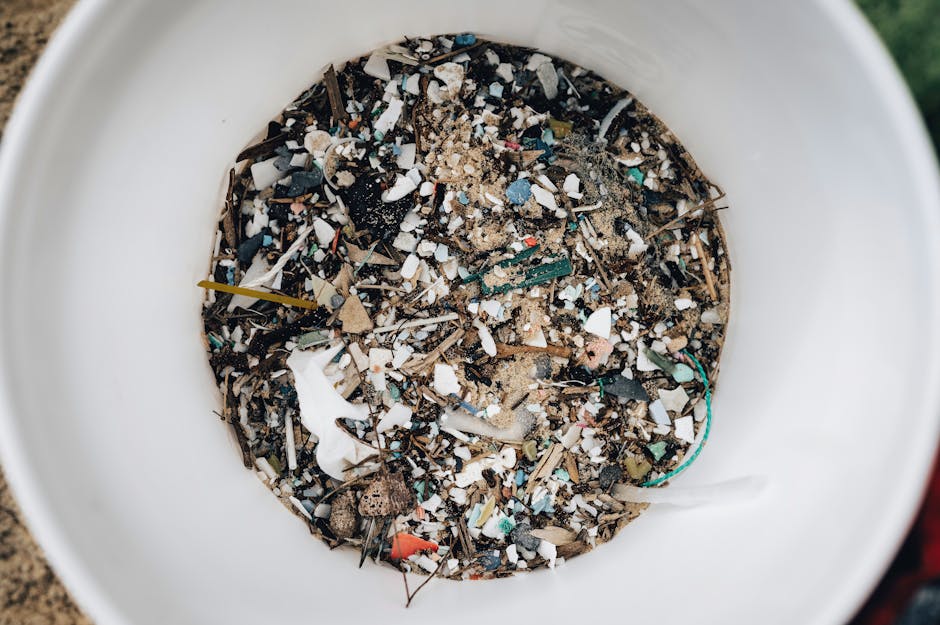
The Trump administration placed microplastics and pharmaceuticals on a federal drinking water contaminant watch list for the first time Thursday, a move that gives Treasure Coast water utilities a new federal framework for evaluating what may be flowing from their taps — but stops well short of requiring any action.
EPA Administrator Lee Zeldin announced the addition as part of the agency's sixth Contaminant Candidate List, a roster of substances the Safe Drinking Water Act requires the EPA to update every five years. Microplastics and pharmaceuticals will appear alongside per- and polyfluoroalkyl substances, or PFAS, and dozens of other chemicals and microbes in the draft document, which opens for 60 days of public comment.
For the roughly 650,000 residents of Martin, St. Lucie and Indian River counties — many of whom draw from municipal systems that pull from the Indian River Lagoon watershed and the Floridan Aquifer — the listing is a tool, not a guarantee. Inclusion on the list allows local regulators to assess risk in their specific water supply but generates no binding monitoring requirement and no enforceable standard.
The Department of Health and Human Services simultaneously announced a $144 million initiative called STOMP — Systematic Targeting Of Microplastics — to develop measurement and removal technologies. The Advanced Research Projects Agency for Health, or ARPA-H, will lead the program. "We are focusing on three questions: What is in the body? What's causing the harm, and how do we remove it?" Health Secretary Robert F. Kennedy Jr. said at a Thursday briefing.
Environmental researchers offered a cautious welcome. "This is an important first step, and I think we should recognize that," said Sherri Mason, a Gannon University researcher who has published peer-reviewed studies on plastic pollution in freshwater.
Advocacy attorneys were sharper. "I think it's fair to call this theater," said Katherine O'Brien of Earthjustice, citing the administration's simultaneous rollback of PFAS regulations and a decision last month not to pursue regulatory action on nine chemicals already on the contaminant list.
Mary Grant of Food & Water Watch, which has petitioned the EPA to include microplastics in a separate unregulated contaminant monitoring rule that would trigger mandatory data collection, said Thursday's action alone is insufficient. "We need to understand the scope of the crisis in our drinking water," Grant said, warning that new regulations based solely on Thursday's announcement could come a decade or more away.
The 60-day public comment period on the draft list begins immediately.
This article was generated with AI assistance using publicly available information. It was reviewed and approved by a human editor before publication. TC Sentinel uses AI writing tools in accordance with FTC guidelines.
Got a tip?
See something newsworthy? Help us cover the Treasure Coast.
Your identity is never published without your permission.

Comments
Be the first to comment.