
Artemis II Blasts Off: Treasure Coast Scores Front-Row View of Moon Mission
NASA's mighty SLS rocket launches four astronauts from Kennedy Space Center Wednesday evening, visible across Martin, St. Lucie and Indian River counties within 30 seconds.
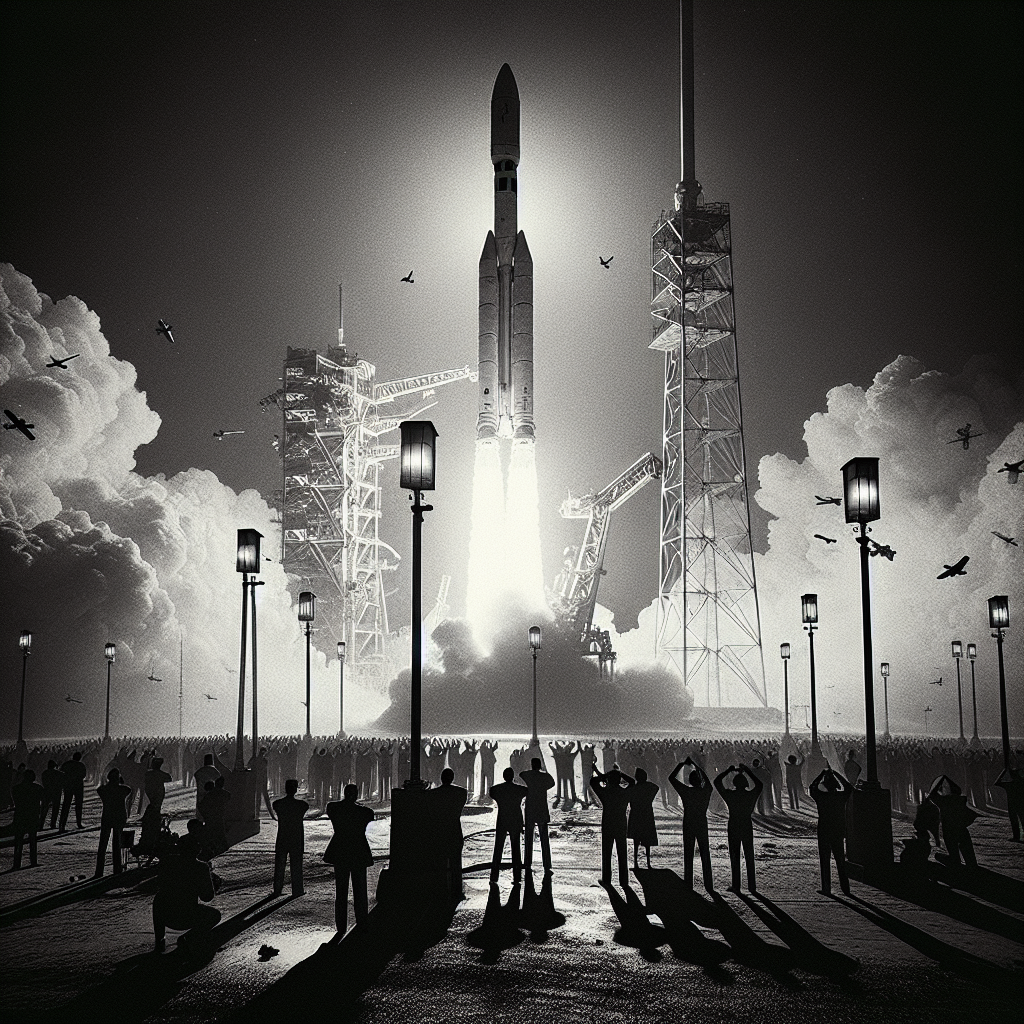
Four astronauts are riding NASA's most powerful rocket into history Wednesday evening, and residents across Indian River, St. Lucie, and Martin counties may not even need to leave their driveways to watch it happen.
NASA's Artemis II mission was scheduled to lift off no earlier than 6:24 p.m. ET Wednesday, April 1, 2026, from Launch Pad 39B at Kennedy Space Center, roughly 70 miles north of Vero Beach. The two-hour launch window gives the agency flexibility to work around weather. As of 4:30 p.m., all systems were showing green.
The three Treasure Coast counties — Indian River, St. Lucie, and Martin — fall squarely inside NASA's published visibility corridor. The 322-foot Space Launch System rocket, generating 8.8 million pounds of thrust, should be visible from Sebastian and Vero Beach as early as 20 seconds after liftoff, with Stuart, Jensen Beach, Fort Pierce, and Port St. Lucie entering the viewing window at approximately the 30-second mark, officials said. That visibility arc assumes clear skies and minimal cloud cover.
The mission carries three American astronauts and one Canadian on a 10-day loop around the moon — venturing approximately 250,000 miles into space, farther than the crew of Apollo 13 — before returning to Earth. No lunar landing is planned, but the flight is designed to stress-test the Orion spacecraft and SLS systems ahead of a crewed surface landing NASA is targeting in as few as two years, according to public documents.
"NASA's Artemis II closeout crew is now completing one of the most critical steps before launch: preparing and closing the crew module hatch to the Orion spacecraft," the agency said in an update issued at 3:17 p.m. Wednesday.
The SLS core stage stands 212 feet tall and burns liquid hydrogen and liquid oxygen through four engines, flanked by two 177-foot solid rocket boosters that produce the bulk of the vehicle's thrust — and most of its spectacle. No sonic booms are expected along the Treasure Coast due to the rocket's eastward trajectory out over the Atlantic.
A second Florida launch follows Thursday: a SpaceX Falcon 9 rocket carrying 29 Starlink satellites is scheduled to lift off from Cape Canaveral Space Force Station between 7:52 a.m. and 11:52 a.m. ET, heading northeast from Launch Complex 40.
Both missions are available to stream live and free via NASA+ on desktop, YouTube, or through Amazon Prime Video's free ad-supported live television channel — no subscription required.
This article was generated with AI assistance using publicly available information. It was reviewed and approved by a human editor before publication. TC Sentinel uses AI writing tools in accordance with FTC guidelines.
Got a tip?
See something newsworthy? Help us cover the Treasure Coast.
Your identity is never published without your permission.

Comments
Be the first to comment.